
Causes of Baby Bottle Tooth Decay

Baby Bottle Tooth Decay is primarily caused by the following factors:
1. Nighttime Bottle-Feeding or Breastfeeding
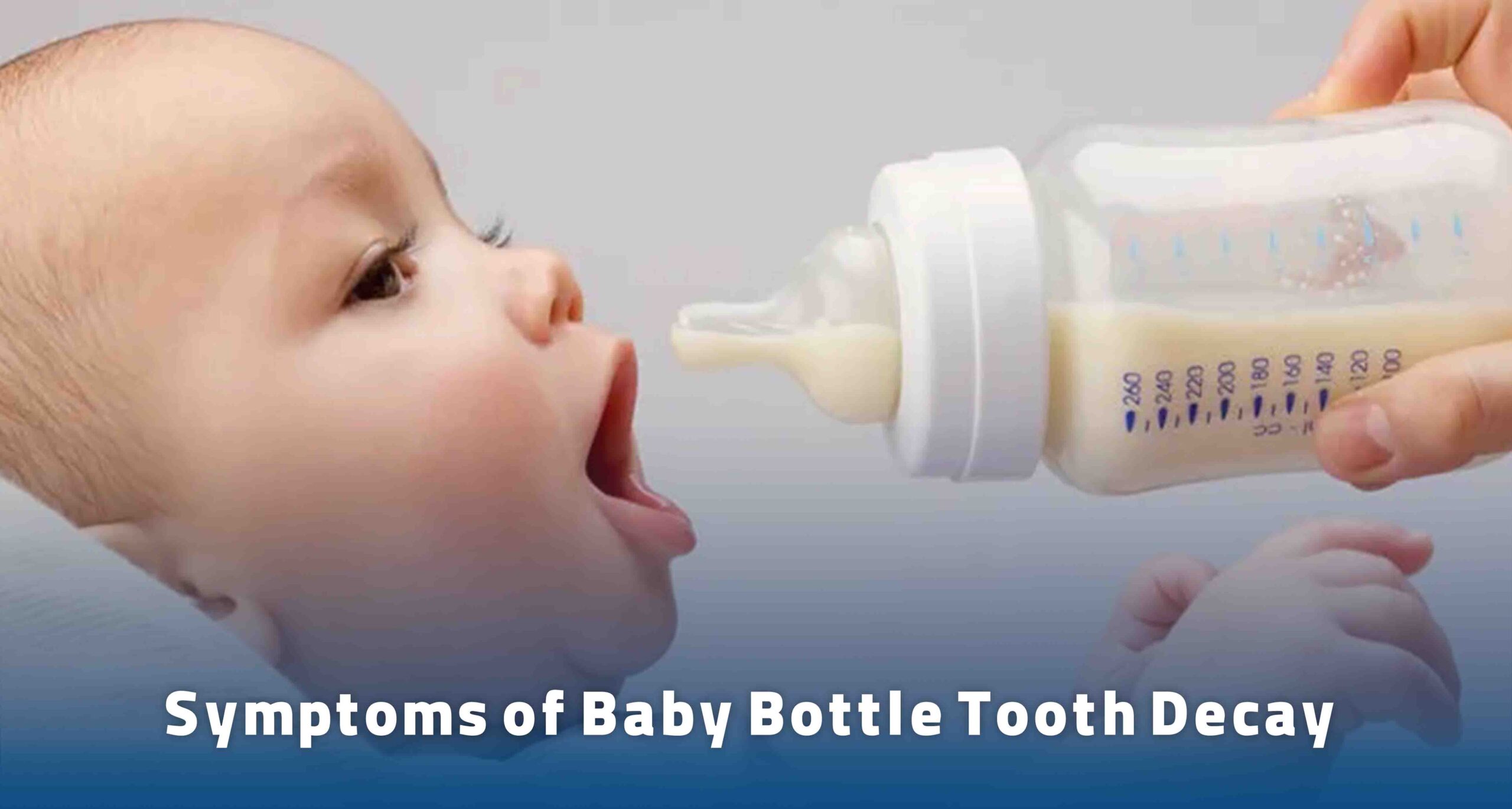
Putting a child to sleep with a bottle containing milk, juice, or sugary liquids allows these fluids to pool in the mouth, leading to bacterial growth and tooth decay.
2. Prolonged Use of a Bottle or Sippy Cup
Frequent consumption of sugary drinks throughout the day, especially via bottles or sippy cups, exposes teeth to sugars for extended periods, increasing the risk of cavities.
3. Dipping Pacifiers in Sweet Substances
Dipping pacifiers in honey, juice, or other sugary liquids accelerates tooth decay by feeding harmful oral bacteria.
Symptoms of Baby Bottle Tooth Decay
Recognizing the early signs of tooth decay is essential for timely intervention. Common symptoms include:
1. White Spots on Front Teeth
The earliest sign of decay appears as chalky white spots on the upper front teeth, indicating enamel demineralization.
2. Tooth Discoloration
As decay progresses, white spots turn brown or black, signaling enamel breakdown.
3. Weak and Fragile Teeth
Affected teeth may become thin, brittle, or prone to chipping and breaking.
4. Toothache and Gum Infections
In advanced cases, decay may lead to tooth pain or gum infections, requiring urgent dental care.
Complications of Baby Bottle Tooth Decay
If left untreated, Baby Bottle Tooth Decay can result in severe complications:
1. Premature Loss of Baby Teeth
Severe decay can cause early tooth loss, impacting chewing ability, speech development, and the proper alignment of permanent teeth.
2. Oral Infections
Advanced decay can lead to painful gum infections and abscesses, sometimes requiring medical intervention.
3. Improper Growth of Permanent Teeth
Early loss of baby teeth can affect the eruption pattern and alignment of permanent teeth, leading to orthodontic issues.
How to Prevent Baby Bottle Tooth Decay

Prevention is key to maintaining healthy teeth in young children. Effective preventive measures include:
1. Replace Sugary Drinks with Water
If your child needs a bottle at bedtime, fill it with water instead of milk or juice to minimize sugar exposure.
2. Remove the Bottle Once Feeding Ends
If your child falls asleep while feeding, take the bottle out of their mouth immediately to prevent prolonged sugar contact.
3. Establish an Early Oral Hygiene Routine
Begin brushing as soon as the first tooth erupts using a soft toothbrush and fluoride toothpaste.
Start flossing when adjacent teeth appear to remove plaque buildup.
4. Transition to a Cup
Encourage your child to switch from a bottle to a cup by their first birthday to reduce prolonged contact with sugary liquids.
5. Schedule the First Dental Visit
The first dental checkup should occur by the age of one or within six months after the first tooth emerges. A pediatric dentist can provide early guidance on cavity prevention.
Treatment for Baby Bottle Tooth Decay
The appropriate treatment depends on the severity of decay:
1. Fluoride Treatment
For early-stage decay, fluoride application can strengthen enamel and slow down cavity progression.
2. Dental Fillings
If cavities develop, the dentist may perform fillings or restorations to repair affected teeth.
3. Pulp Therapy and Dental Crowns
For extensive decay that reaches the tooth’s nerve, pulp therapy (baby root canal) and crowns may be necessary to preserve the tooth.
4. Tooth Extraction
Severely damaged teeth may need to be extracted and replaced with space maintainers to prevent orthodontic issues.
Why Are Upper Front Teeth More Prone to Baby Bottle Tooth Decay?
When a child sleeps while bottle-feeding or breastfeeding, their tongue naturally covers the lower front teeth, protecting them from direct sugar exposure. However, the upper front teeth remain unprotected, making them more vulnerable to decay.
What Age Is Baby Bottle Tooth Decay Most Common?
This condition is most prevalent in children aged 2 to 5, particularly those who continue to use bottles instead of cups and lack proper oral hygiene.
When Should a Child Stop Using a Bottle?
While every child is different, limiting nighttime bottle use after the age of one can significantly reduce the risk of tooth decay. Encouraging the transition to a regular cup helps protect your child’s oral health.
By following these preventive measures, parents can safeguard their child’s smile and ensure a lifetime of healthy teeth.