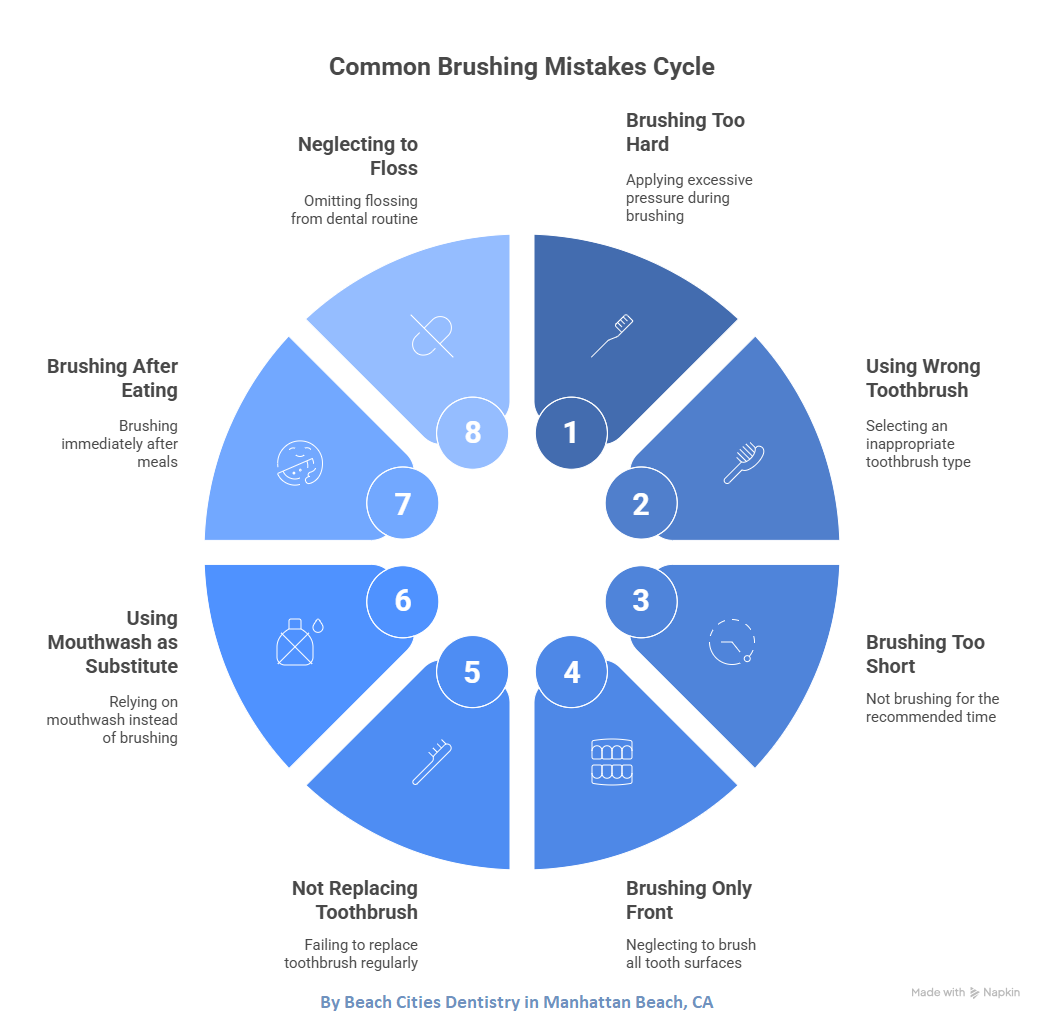
1. Brushing Too Hard
What happens if you brush your teeth too hard?
Many people believe that applying more pressure while brushing leads to cleaner teeth. However, brushing too hard can actually damage your gums and enamel. It can cause your gums to recede, exposing the sensitive roots of your teeth and increasing the risk of tooth decay and sensitivity.
How to stop brushing too hard?
Use gentle pressure when brushing. Let the bristles of the toothbrush do the work. A soft-bristled toothbrush is ideal for most people and reduces the risk of damage. Remember, the goal is to clean your teeth, not scrub them aggressively.
2. Using the Wrong Toothbrush
Does it matter which toothbrush You use?
Using a toothbrush that’s too hard or the wrong size can hinder effective cleaning. A hard-bristled brush can cause damage to your gums and enamel, while a brush that’s too large for your mouth might not reach all areas effectively.
Which toothbrush is best: soft, medium or hard?
Choose a toothbrush with soft bristles and a size that fits comfortably in your mouth. For most adults, a toothbrush with a small head is the best option, allowing you to reach the back teeth easily.
3. Brushing for Too Short a Time
Does it matter what time you brush?
Many people brush their teeth for less than the recommended two minutes. Brushing for only 30 seconds or a minute may not allow enough time to clean all surfaces of your teeth properly, leaving plaque and bacteria behind.
How long should you brush your teeth?
Aim for at least two minutes of brushing. To help keep track of time, you could use a timer or an electric toothbrush with a built-in timer. Divide your mouth into quadrants and spend 30 seconds on each section.
4. Brushing Only the Front of Your Teeth
What’s the issue with this?
Focusing only on the front surfaces of your teeth means you miss cleaning the back and chewing surfaces. These areas are just as important, as food particles and plaque can build up there and lead to decay or gum disease.
What should you do instead?
Make sure to brush all surfaces of your teeth: the front, back, and chewing surfaces. Don’t forget to gently brush your tongue as well, as it can harbor bacteria that contribute to bad breath.
5. Not Replacing Your Toothbrush Regularly
Why should we replace a toothbrush?
A worn-out toothbrush with frayed bristles is less effective at cleaning teeth and gums. Old toothbrushes can also harbor bacteria, which you don’t want to introduce to your mouth.
How often should you change your toothbrush?
“Replace your toothbrush every three to four months or sooner if the bristles become frayed.”
The Journal of the American Dental Association (JADA)
If you’ve been sick, it’s also a good idea to switch to a new toothbrush to avoid reintroducing germs.
6. Using Mouthwash as a Substitute for Brushing
Can you use mouthwash instead of brushing?
Mouthwash can help freshen your breath and kill some bacteria, but it is not a substitute for brushing. Mouthwash alone does not remove plaque or food particles from your teeth and gums.
What should you do instead?
Use mouthwash as a supplement to, not a replacement for, brushing and flossing. Make sure you brush and floss first to remove plaque, and use mouthwash as an additional step for a cleaner mouth.
7. Brushing Immediately After Eating
Why should we delay brushing after eating?
Brushing your teeth right after eating, especially after consuming acidic foods or drinks, can harm your enamel. Acids from food and drink soften the enamel, and brushing too soon can cause enamel erosion.
How long should you wait to brush your teeth after eating?
Wait at least 30 minutes after eating before brushing your teeth. This gives your saliva time to neutralize acids and re-harden your enamel.
8. Neglecting to Floss
What is the purpose of flossing?
Brushing your teeth is only part of the equation for good oral hygiene. Flossing is essential for cleaning the spaces between your teeth where a toothbrush can’t reach. Neglecting to floss can leave plaque and food particles trapped, leading to cavities and gum disease.
What is the correct way to floss teeth?
Floss at least once a day, ideally before brushing. Gently slide the floss between your teeth and along the gumline to remove any buildup. Be careful not to snap the floss, as it can harm your gums.
Conclusion
Avoiding these common brushing mistakes is essential for maintaining good oral health.
| Mistake | What Happens | What to Do Instead |
|---|
| Brushing Too Hard | Damage to gums and enamel, causing sensitivity and gum recession. | Brush gently with soft-bristled brushes and avoid excessive pressure. |
| Using the Wrong Toothbrush | Ineffective cleaning, potential damage to gums and enamel. | Use a soft-bristled toothbrush that fits comfortably in your mouth. |
| Brushing for Too Short a Time | Plaque and bacteria left behind due to insufficient cleaning. | Brush for at least two minutes and consider using a timer. |
| Brushing Only the Front of Your Teeth | Failure to clean all surfaces, increasing the risk of plaque buildup. | Brush all surfaces of your teeth, including back and chewing surfaces. |
| Not Replacing Your Toothbrush Regularly | Worn-out bristles lead to ineffective cleaning and potential bacterial buildup. | Replace your toothbrush every 3–4 months or when bristles are frayed. |
| Using Mouthwash as a Substitute for Brushing | Mouthwash can’t remove plaque or food particles, it only masks the odor. | Use mouthwash as a supplement, not a substitute, for brushing and flossing. |
| Brushing Immediately After Eating | Enamel is softened by acids, leading to potential enamel damage. | Wait at least 30 minutes after eating before brushing. |
| Neglecting to Floss | Food particles and plaque remain between teeth, contributing to cavities and gum disease. | Floss daily to remove food particles and plaque between teeth. |
“Brushing should touch upon all surfaces—inner, outer, and chewing. Also, when brushing, the ADA recommends that people use a soft-bristled toothbrush and apply gentle pressure, both of which may help reduce the risk of gingival injury.”
At Beach Cities Dentistry, we emphasize the importance of proper brushing and flossing habits. If you have any questions or concerns about your brushing technique, don’t hesitate to ask us during your next visit!
Sources:
https://www.ada.org/resources/ada-library/oral-health-topics/toothbrushes
https://jada.ada.org/article/S0002-8177%2814%2960924-7/fulltext