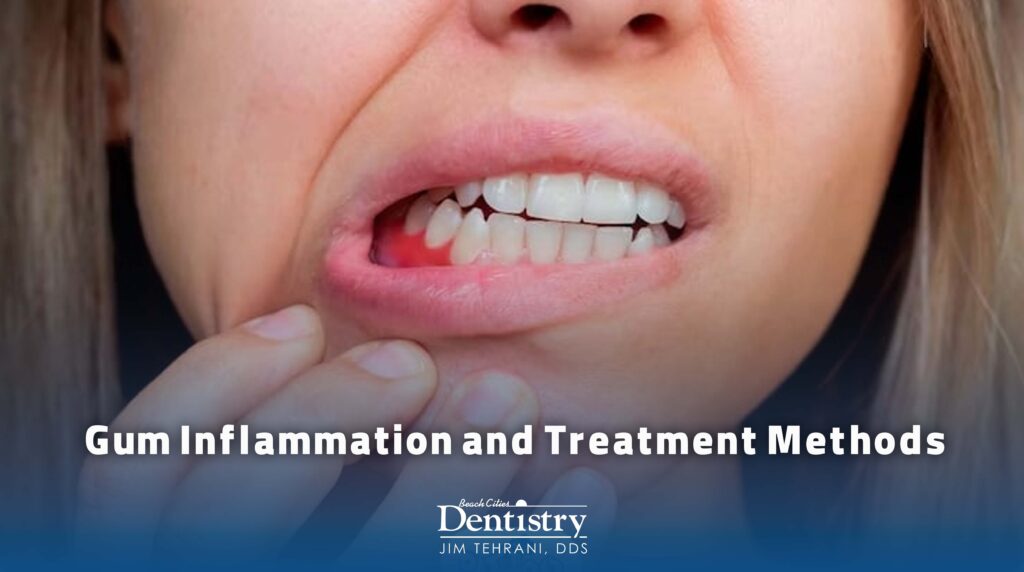

Gum Inflammation and Treatment Methods
Swollen and inflamed gums are one of the most common dental problems. Since gums are constantly exposed to food, drinks, and bacteria, they are highly vulnerable to infections and inflammation. That’s why maintaining proper oral hygiene is crucial to prevent gum swelling and protect your teeth.
You should know that the gum protects the tooth’s root and prevents the jawbone from decaying. Since gum infection is among the most common oral diseases, neglecting oral hygiene can lead to decay, fractures, and other complications. Here, we will review methods for treating gum swelling.
“Gingivitis is the mildest form of periodontal disease. It causes the gums to become red, swollen, and bleed easily. There is usually little or no discomfort at this stage. Luckily, gingivitis is reversible with professional treatment and good at-home oral care.”
American Academy of Periodontology
Table of Contents
Swelling of the gums, also referred to as gingival enlargement (gingival hyperplasia or hypertrophy) is the excessive and abnormal growth of gum tissues. If the areas around your teeth look abnormally large or have unusual red spots, you may be experiencing gingivitis or a gum infection. Although swollen gums are uncomfortable, gingivitis is a common condition that can often be managed effectively if treated early.
Dr. Jim Tehrani, DDS
What is Gum inflammation?
Gum inflammation is a common condition that causes redness, swelling, and bleeding of the gums. It often results from the buildup of plaque and tartar on the teeth.
Plaque is a thin layer of bacteria that continuously forms on the teeth. If plaque is not removed, it can harden and turn into tartar, a hard deposit that is not easily removed. Tartar can irritate the gums and cause gum disease.

Therefore, when plaque and tartar accumulate under the gum line, Gum inflammation is associated with symptoms such as redness, swelling, and bleeding.
Why does the gum swell?
Failure to use a toothbrush and floss properly is the leading cause of swollen gums. Plaque forms between the teeth and gums when food debris and bacteria accumulate.
If these plaques are not cleaned daily by brushing and flossing, they gradually harden, separating the gum tissue from the teeth. All kinds of bacteria, plaque, and tartar penetrate this space, and people frequently get infection and inflammation of the gums and witness swelling of the gums for a long time.
What are the leading causes of gum inflammation?
In addition to lack of attention or neglect of oral hygiene, other reasons cause swelling of the gums. Among the main and most important of them, the following can be mentioned:
- Smoking or chewing edible tobacco, as well as drinking alcohol, affects the body’s defense mechanism.
- Improper nutrition, including the use of carbohydrates and sugary substances, as well as lack of vitamin C
- Lack of saliva and dry mouth
- Improper dental restorations that cause gum irritation and inflammation.
- Crooked and overlapped teeth, as well as hidden and semi-hidden teeth, are perfect places for plaque to accumulate and are difficult to clean.
- Cancer and its treatment, including diseases such as HIV and AIDS, reduce immunity in the body.
- It is taking certain drugs such as phenytoin (Dilantin, Phenitec) for seizures, epilepsy, and some calcium channel-blocking pills that are used for enzymes, high blood pressure, and other cases.
- Hormonal changes such as menstruation, pregnancy, menopause, or the use of birth control pills cause changes in hormones. The increase in hormones makes the blood vessels in the gums more exposed to bacteria and infection.
- Genetics (this case is being investigated and researched more, but with the investigations done so far, gum diseases can be passed from parents to children.)
- Diabetes reduces blood circulation and the ability to heal self-immunity and gums.
- High stress weakens the body’s defense system against the attack of bacteria.

At Beach Cities Dentistry, our talented and experienced dental professionals work together to provide top-quality care for our patients.
Jim Tehrani, DDS
– USC graduate (1997)
– Invisalign I/II certified
– Laser dentistry certified
– Member of ADA, CDA, Western Dental Society
Symptoms of Gum inflammation
Redness, swelling, and bleeding in the gums are some of the symptoms that indicate a gum infection. If these symptoms persist, you should see a dentist. Prompt treatment can prevent gum disease from progressing.
Here are some signs and symptoms of gum infection:
- Gum swelling
- Gum sensitivity
- Bleeding while brushing or flossing
- Redness
- Dark or bluish gum discoloration due to poor blood circulation
- Receding gums
- Pain
- Bad breath
- Bad taste in the mouth
Symptoms of Gingivitis (Early Gum Disease)
- Receding gums, which can make the teeth appear longer.
- Formation of periodontal pockets between teeth and gums
- Sensitivity of tooth roots
- Plaque inside and below the tooth line
- Oral ulcer (aphthous ulcer)
- Formation of a gap (narrow V-shaped gap) between the teeth and gums
- Losing teeth due to damage to the periodontal ligament and alveolar bone
- A change in the position or alignment of the teeth that affects the bite.
Gum inflammation treatment methods
If gum infection is treated early, it can prevent progression to periodontitis and other serious complications. So, if you experience any of the symptoms mentioned above, see a good dentist as soon as possible.
The treatment of gum infection includes plaque removal. Scaling and brushing are done on the teeth.
It may also be recommended to use antibiotics for gum infection to prevent the growth of bacteria and even toothpaste for gum inflammation.
It should be noted that Beach Cities Dentistry in Manhattan Beach has a significant offer for testing and screening for new patients and is done for only 79$.
If the gum infection progresses to gum inflammation, procedures such as deep root cleaning, scaling (tartar removal), and root planing may be performed. Oral antibiotics and topical antibiotic gels are also prescribed.
In severe cases, flap surgery (reducing the distance between teeth and gums), soft tissue grafting, or bone grafting may be necessary.
Best Home Remedies for Swollen Gums
You can use home remedies if you are newly diagnosed with gum inflammation. Otherwise, after more than two weeks of gum swelling, you should immediately visit a dentist specializing in gum diseases.
Thus, the primary and practical methods of home treatment of gum swelling are as follows:
Mouthwash for gum inflammation
Using mouthwash to prevent gum infection, oral and dental diseases, and Gum inflammation is better. Some studies suggest that green tea may have mild antibacterial effects, but the most effective mouthwash for gingivitis is chlorhexidine, as recommended by dentists.
Doctors have introduced mild pale tea and salt water as natural and non-destructive mouthwashes to maintain oral and dental health. These products are compatible with the oral and dental environment and do not destroy beneficial bacteria.
Use of salt water
Rinsing the mouth with salt water often relieves and cures Gum inflammation. Thus, mix a teaspoon of salt with 8 ounces of lukewarm water. After that, rinse the mouth with this solution for 30 seconds and pour the water out (do not swallow).
Doing this two to three times daily will disinfect the oral cavity and gum tissue, and gum swelling will disappear over time.
Using hot and cold water compresses
Experience has shown that using hot and cold water compresses two to three times daily in 5-minute intervals improves gum inflammation and reduces swelling.
Using hydrogen peroxide
Many scientists and experts in traditional medicine consider using hydrogen peroxide helpful in treating gum inflammation. Mix three tablespoons of 3% hydrogen peroxide with three tablespoons of water and then gargle for 30 seconds.
Do this twice to three times daily and witness its favorable effects in reducing and treating gum swelling. It is recommended not to swallow the hydrogen peroxide solution, and after rinsing the mouth, throw it out completely.
Proper diet
As mentioned, malnutrition and improper food consumption cause infection and gum inflammation.
In this regard, increase the consumption of foods containing vitamin C, such as melons, bell peppers, strawberries, pineapples, kiwis, oranges, and healthy and pasteurized dairy products to absorb enough calcium in the body.
Medications and Antibiotics for Gum Infections
Antibiotics may be prescribed in some cases of severe gum infection. Chlorhexidine mouthwash, while not an antibiotic, is an effective antimicrobial rinse commonly used in dentistry.
FAQ's
Mild gum swelling may improve within a few days with home remedies, but persistent swelling needs dental care.
Salt water helps reduce bacteria and soothe gums but does not replace professional treatment.
If swelling lasts more than two weeks, or if you notice pain, bleeding, or receding gums, visit a dentist immediately.
“Gingivitis is the mildest type of gum disease—signs include red, swollen, or easily bleeding gums... Gingivitis is preventable and reversible with good oral hygiene (such as brushing twice daily and flossing daily) and professional treatment.”
CDC
Conclusion
Gum inflammation is a common and straightforward disease to many people. While this disease is simple, its exacerbation causes damage to the gum tissue, loss of the jaw bone, and loose teeth. Therefore, take this chronic disease seriously and treat it immediately if you see it.
For advanced gum problems or implant needs, the experts at Beach Cities Dentistry in Manhattan Beach offer specialized periodontal treatments using the latest techniques.
Sources:
https://www.perio.org/for-patients/gum-disease-information/
https://www.cdc.gov/oral-health/data-research/facts-stats/fast-facts-gum-disease.html