
Bad breath, also known as halitosis, is something that almost everyone deals with at some point in their lives. It’s more than just an embarrassing problem—it can affect your confidence and how you interact with others.
At Beach Cities Dentistry in Manhattan Beach, California, we frequently see patients with concerns about bad breath. If you’re dealing with this, you’re not alone. Let’s examine the potential causes of your bad breath and explore ways to address it.
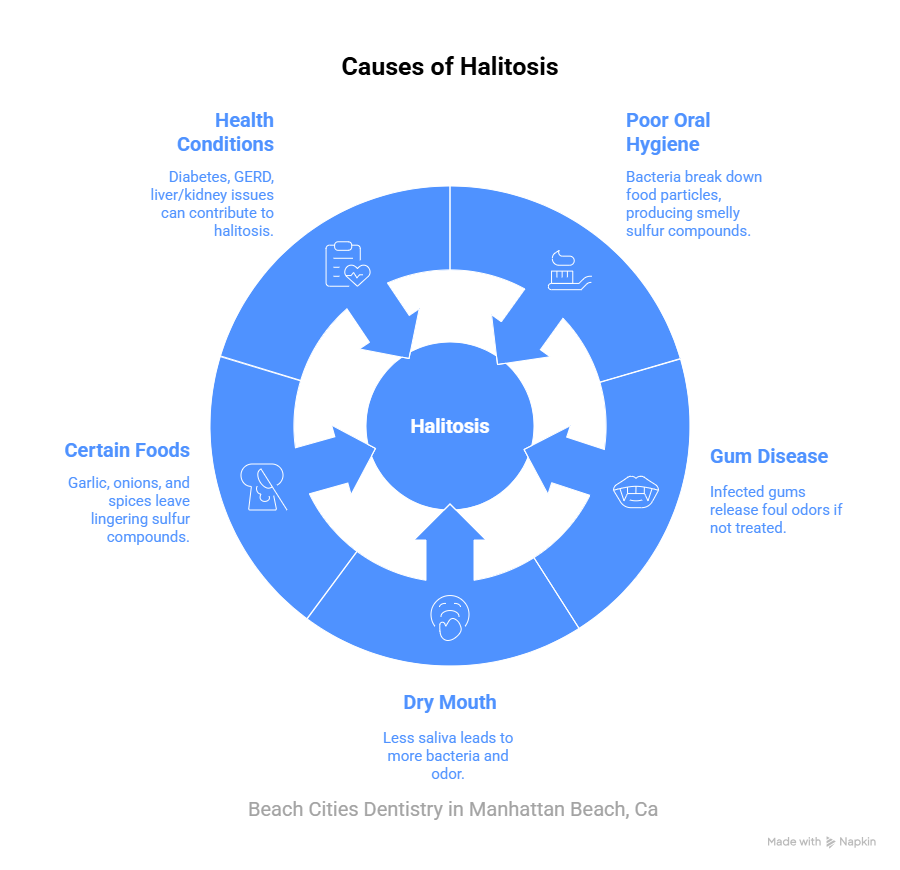
Bad Breath Causes
There are several reasons why you might be struggling with bad breath, and it’s not always due to something you’ve eaten. Here are some common causes:
Poor Oral Hygiene
The most common cause of bad breath is poor oral hygiene. When food particles stay in your mouth, bacteria begin to break them down, and that’s when bad odors form.
“Halitosis, or bad breath, most often starts in the mouth. Poor oral hygiene allows food particles to collect on the surface of the tongue, where bacteria break them down, producing sulfur compounds that cause bad breath.”
Journal of the American Dental Association (JADA)
Gum Disease
If your gums are red, swollen, or bleed when you brush, you might have gum disease, which can cause bad breath. Bacteria in the gums release odors, and this condition can worsen over time if left untreated. Regular checkups with your dentist are essential for detecting gum disease early.
Xerostomia (Dry Mouth)
Xerostomia, or dry mouth, is when your mouth lacks adequate saliva production. When your mouth is dry, bacteria stay in your mouth, leading to bad breath. If you frequently notice your mouth is dry, drinking more water can help, as can chewing sugar-free gum.
Certain Foods
Foods like garlic, onions, and strong spices can leave a lingering odor in your mouth. These foods contain sulfur compounds that are absorbed into your bloodstream and exhaled through your breath. Although the smell eventually dissipates, it can linger for hours, especially after meals.
Health Conditions
Bad breath from stomach : Sometimes, bad breath can be a sign of underlying conditions such as diabetes, gastroesophageal reflux disease (GERD), or liver and kidney issues. People with kidney or liver issues can also experience bad breath. In such cases, it may have a distinct odor. If your bad breath persists, it’s a good idea to consult a doctor.
How do dentists diagnose bad breath?
To determine the cause of your bad breath, your dentist will likely ask you about your oral hygiene habits, diet, and overall health. They’ll do an exam to check for signs of gum disease or tooth decay.
In some cases, a special tool, like a halimeter, can measure the sulfur compounds in your breath.
How to get rid of bad breath permanently?
Once you identify the cause of your bad breath, there are steps you can take to address it. Here’s what you can do:
Brush and Floss Regularly
Brush your teeth at least twice a day, and don’t forget to floss. Bacteria can hide between your teeth, so flossing helps to remove the plaque that causes bad breath.
“Proper oral hygiene, including brushing, flossing, and using mouthwash, is essential for preventing the buildup of bacteria and food particles that can cause bad breath.”
(American Dental Association)
Visit Your Dentist Regularly
Regular dental checkups are crucial for detecting any dental conditions that may be contributing to your bad breath. Professional cleanings can help remove plaque and tartar that contribute to the problem.
Stay Hydrated
Drinking plenty of water throughout the day can help keep your mouth moist and prevent xerostomia, which is a common cause of bad breath.
Chew Sugar-Free Gum
If you’re looking for a temporary solution, chewing sugar-free gum, especially gum containing xylitol can help stimulate saliva production, which helps wash away food debris and neutralize odors.
Adjust Your Diet
If you’re consuming a lot of garlic or onions, it may be a good idea to reduce your intake. Eating fruits and vegetables can also help, as they naturally clean your teeth and freshen your breath.
Treat Health Conditions
If your bad breath is related to a health issue, treating the underlying condition will likely improve breath odor. Whether it’s diabetes, acid reflux, or another condition, addressing it can help you feel better and breathe easier.