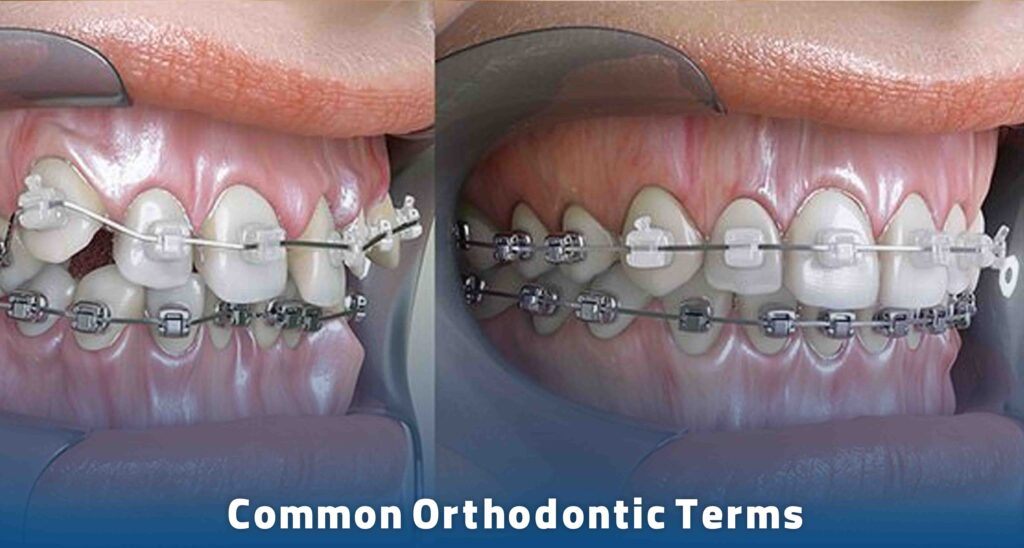

The Orthodontic Terminology
This article will introduce and explain standard orthodontic terms you may encounter during treatment.
Appliances
Orthodontic appliances refer to various instruments used to correct dental and jaw misalignments or irregularities. These devices, including brackets, bands, retainers, and other related devices, can be fixed or removable.
Archwire

An archwire is a U-shaped metal wire that passes through orthodontic brackets and transmits force to the teeth to guide them into the desired position.
Band

Orthodontic bands are metal rings placed around the back teeth (molars) and act as attachment points for orthodontic wires and other devices.
Bracket
A typical orthodontic term is bracket. Brackets are small components bonded to the surface of the teeth that hold the orthodontic wire.
Bonding
Orthodontic bonding is the process of bonding brackets and other orthodontic components to the teeth using special adhesives.
Fixed Appliance
Fixed appliances include appliances bonded to the teeth and remain in the mouth until the treatment is complete.
Removable Appliance

Removable appliances include appliances that the patient can remove from their mouth.
Invisalign
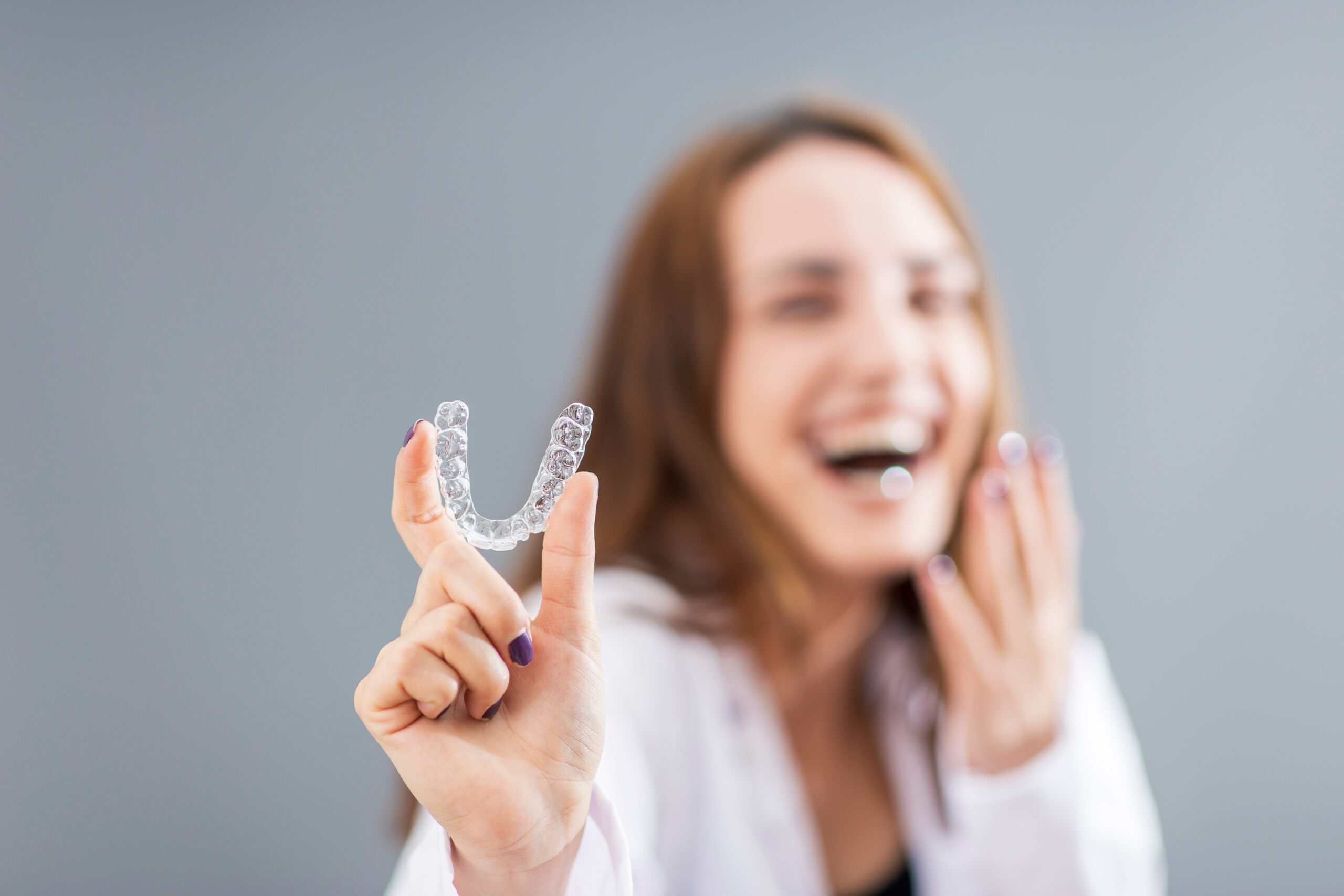
Invisalign is an orthodontic treatment that uses nearly invisible, transparent trays to move teeth.
Ceramic orthodontics
Ceramic orthodontics involves using ceramic brackets and metal wires that are less noticeable because they are colored close to the teeth.
Functional Appliance
Functional orthodontics uses appliances designed to correct the jaw position and improve the mouth and teeth function.
Lingual orthodontics

Lingual orthodontics is an orthodontic treatment in which brackets and wires are bonded to the back of the teeth.
Orthodontic wax
Orthodontic wax is a soft, moldable material that patients can place over their brackets and wires to prevent irritation of the gums and soft tissues of the mouth.
Separator
A separator (or space maintainer) is a common orthodontic term and is a small plastic or rubber ring placed between the teeth to create space for orthodontic bands.
Retainer
Retainers are devices used after the main course of orthodontic treatment to keep the teeth in their new position.
Bruxism
Teeth grinding is the habit of grinding or clenching the teeth, which can cause damage to the teeth and lead to jaw problems.
Crossbite
A crossbite is a malocclusion in which the upper and lower teeth are not aligned properly.
Crowding
Crowding is a condition in which teeth are placed unevenly and tightly together due to a lack of space in the jaw.
Deband
Debanding refers to removing orthodontic bands from teeth after treatment is complete.
Hawley
A Hawley retainer is a removable retainer used after the main course of orthodontic treatment is complete.
Herbst appliance
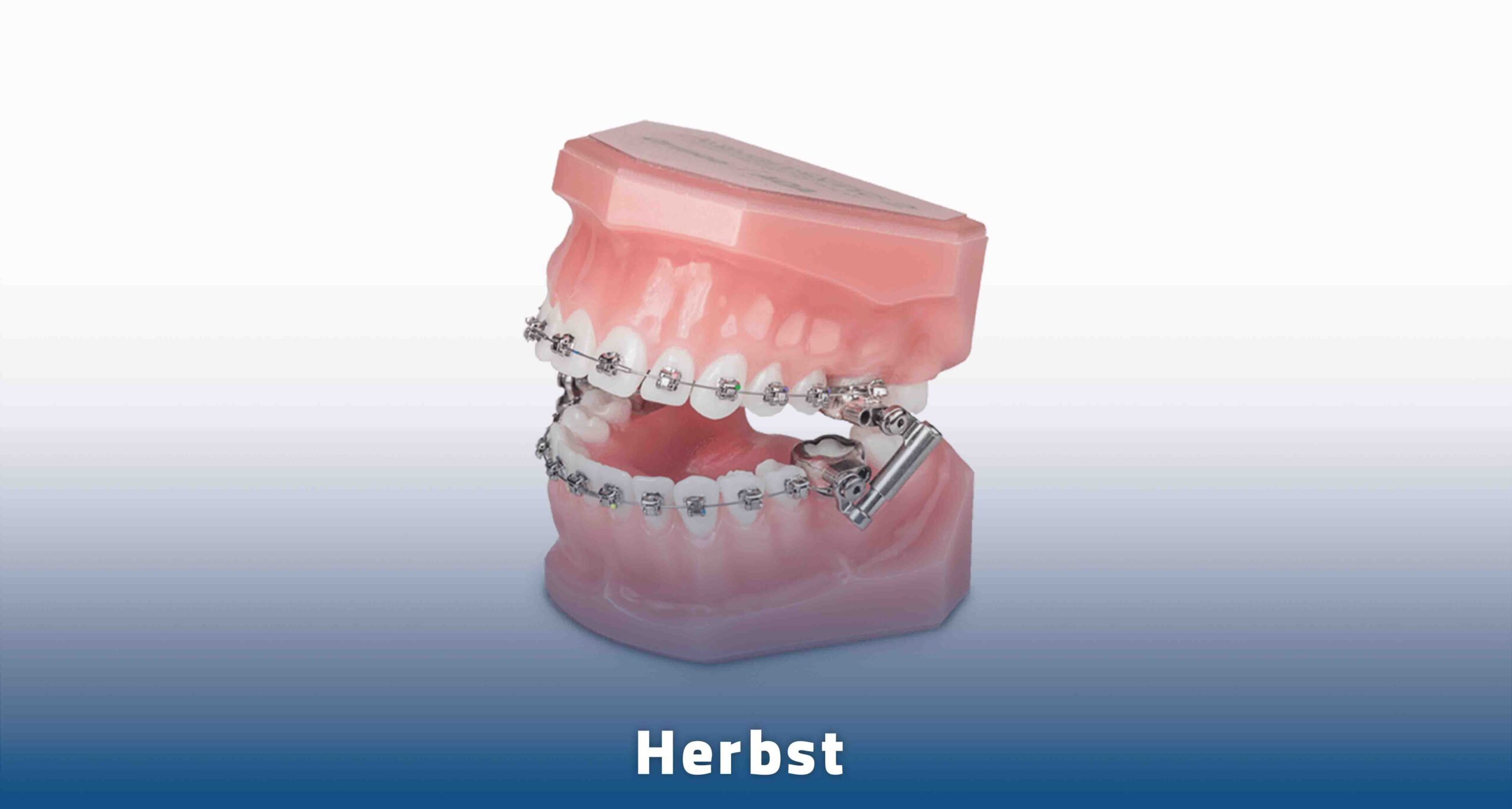
The Herbst appliance is a fixed orthodontic device used to correct jaw alignment.
Deep bite
A deep bite is a malocclusion in which the upper front teeth are placed abnormally over the lower front teeth.
Diastema
Diastema is a gap between the teeth (space between two teeth), usually seen in the front teeth.
Early orthodontic treatment
Early orthodontic treatment refers to treatments performed in childhood and before the teeth and jaws are fully developed.
Orthodontic Elastics
Orthodontic elastics are tiny rubber bands between brackets and braces that help move teeth and correct jaw deformities.
Tooth Extraction
Tooth extraction removes one or more teeth from the mouth, which may be done because of problems such as crowded teeth, severe decay, or other deformities.
Facemask
A facemask is an external orthodontic appliance that applies pressure to the face and jaws to improve jaw position.
Mouthguard
A mouthguard is a protective device that protects the teeth and jaws from external impacts and injuries.
Impression
A typical orthodontic term is impression or impression-taking. An impression is a process in which a mold is taken of a patient’s teeth and mouth.
Frenectomy
A frenectomy is a type of minor oral surgery performed to remove or reposition the oral frenulum.
Habit therapy
Habit therapy refers to methods used to stop undesirable oral habits such as thumb sucking and teeth grinding.
Impacted tooth
An impacted tooth is a tooth that, for various reasons, cannot emerge properly in the mouth.
Lateral cephalometric radiograph
A lateral cephalometric radiograph is a radiology image that helps examine the jaw and dental structures from the side.
Malocclusion
Malocclusion refers to abnormalities involving the misalignment of the teeth and jaws.
Leeway space
Leeway space is the extra space in the jaws after baby teeth fall out and permanent teeth erupt.
Lingual holding arch
A lingual holding arch is a fixed orthodontic appliance attached to the back of the lower teeth.
Mixed dentition
Mixed dentition is when both baby and permanent teeth are present in a child’s life.
O-ring
O-rings are small rubber rings used to hold orthodontic wire inside brackets.
Openbite
An open bite is a condition in which the upper and lower front teeth do not meet correctly.
Orthodontist
An orthodontist is a dentist who specializes in diagnosing, preventing, and treating dental and jaw abnormalities.
Orthognathic surgery
Orthognathic surgery is performed to correct jaw abnormalities and improve the function and appearance of the mouth and teeth.
Overbite

Overbite is a condition in which the upper front teeth are positioned abnormally over the lower front teeth.
Overjet
Overjet is a horizontal gap between the upper and lower front teeth.
Underbite
Another common orthodontic term is underbite, in which the lower front teeth are positioned further forward than the upper front teeth.
Panoramic radiograph
A panoramic radiograph is a radiology image showing all teeth, jaws, and surrounding structures in one wide image.
Rapid Palatal Expansion
A rapid palatal expander is an orthodontic appliance used to widen the width of the upper jaw.
Space maintenance
A space maintainer is a device used to maintain the space needed for permanent teeth to erupt after losing baby teeth.
Temporomandibular joint (TMJ)
The temporomandibular joint is the joint that connects the lower jaw to the skull.
Conclusion
Having sufficient knowledge about the devices, treatment stages, and potential issues, you can better collaborate with your treatment team and make more informed decisions.